
The wake-up call
Last March, I watched a client's organic traffic drop 40% in six weeks.
Nothing changed on their site. No penalty. No algorithm update. Their rankings were actually fine.
The problem? Google was answering their customers' questions before they ever clicked.
That was my wake-up call. After 15 years in SEO, I had to completely rethink what "winning" looks like.
We are in the answer business now
We are not in the "10 blue links" business anymore. We are in the answer business.
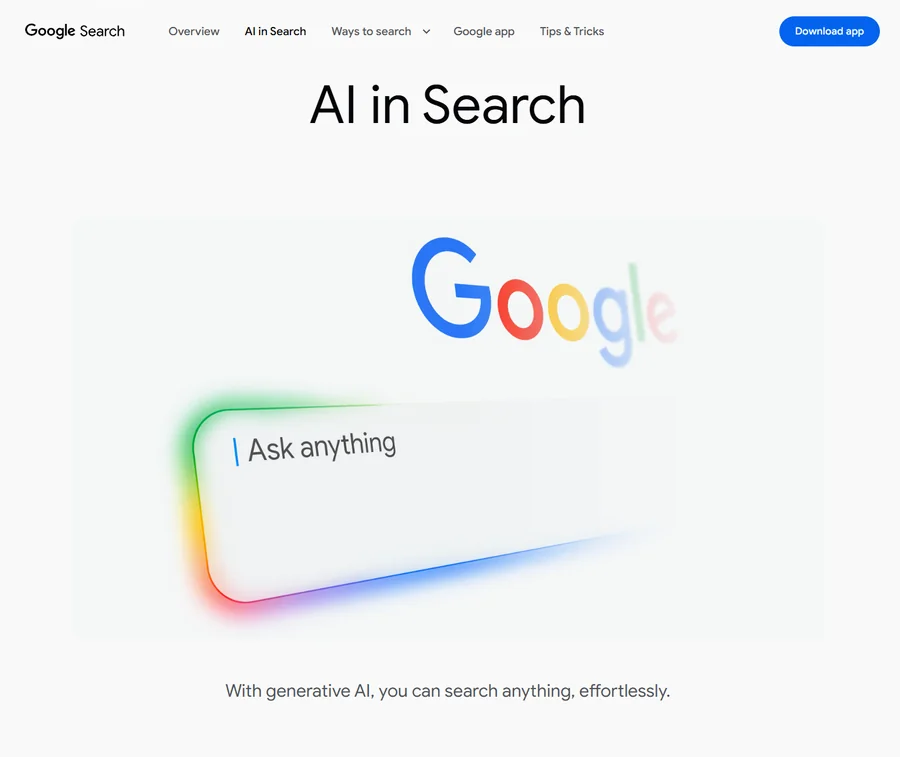
Google's AI Overviews have fundamentally shifted the playing field. The new metrics are not just rankings and clicks. They are citations, entity authority, and synthesizability.
The old question was "Do we rank?" The new question is "Are we trusted enough to be cited?"
Citations are the new number one ranking
Being the sourced answer can drive higher-intent traffic than a first-page listing ever did.
When a buyer arrives after seeing your brand cited in an AI-generated answer, they already have context, validation, and a reason to trust you.
- Old KPI: keyword rankings and blue-link click-through rate.
- New KPI: citation frequency, mention quality, and share of model across AI answer surfaces.
- Strategic goal: become the selected source, not just another indexed result.
Structured data is non-negotiable
Structured data is the roadmap AI uses to understand your value.
If your site architecture is messy, your expertise becomes harder for answer engines to retrieve, interpret, and cite.
The companies that thrive will not have the most content. They will have the most reliable and synthesizable information.
The recovery came from optimizing for citations
The client that lost 40% of organic traffic recovered by optimizing for citations, not just clicks.
We clarified entity relationships, improved content structure, strengthened schema, and built pages that answer engines could understand and cite.
That is the core of the AI Visibility OS: build the infrastructure that allows your brand to become retrievable, citeable, and trusted.
The question every CMO should ask
Most dashboards still focus on rankings, sessions, and clicks. Those metrics remain useful, but they are no longer enough.
Are you still measuring success by rankings alone, or are you measuring how often your brand is selected as the answer?
Audit your AI visibility
Brainpan.AI helps brands structure content, entities, schema, and retrieval signals so answer engines can understand, retrieve, and cite them.
Request AI Visibility Audit